
Access Colorado Marriage Records
Finding marriage records in Colorado involves knowing where to look. The state has specific offices that handle these documents. County clerk and recorder offices issue marriage licenses and keep the actual certificates. The Colorado Department of Public Health and Environment provides marriage verifications. Understanding this distinction helps you get the right document faster. Whether you need proof of marriage for legal purposes or genealogy research, Colorado offers several paths to access these vital records.
Colorado Marriage Records Quick Facts
Where to Find Colorado Marriage Records
Colorado marriage records are kept in different places depending on what you need. The county clerk and recorder's office is your first stop for marriage licenses and certificates. These offices handle the original documents. They issue licenses before weddings and file certificates after ceremonies. Each of Colorado's 64 counties has its own clerk and recorder office. You must visit the office in the county where the marriage took place.
The Colorado Department of Public Health and Environment keeps marriage verifications. These are not the same as certificates. A verification only confirms that a marriage happened. It shows the names of both parties and the date of marriage. It does not include all the details found on a marriage certificate. The state has these records from 1900 to the present day.
The Colorado State Archives holds older marriage records. They have documents from before 1960. If you got married after 1960, the Archives likely does not have your record. You should check with the county clerk instead. The Archives maintains a statewide marriage index covering 1890 to 1939. This index is available online through their database.
Note: Marriage certificates and marriage verifications serve different purposes in Colorado.
County Clerk and Recorder Offices
County clerk and recorder offices are the primary source for marriage licenses in Colorado. Under C.R.S. § 14-2-106, these offices issue licenses to marry. At least one party must appear in person. The license fee includes $7 for the license plus $20 for the Colorado domestic abuse program fund. You must use the license within 35 days. It is only valid within Colorado state boundaries.
After the wedding, the officiant returns the completed certificate to the county clerk. The clerk then registers the marriage. This creates the official record. You can get certified copies from the same office. Most counties charge a fee for copies. Some offer online request forms. Others require in-person visits or mail requests.
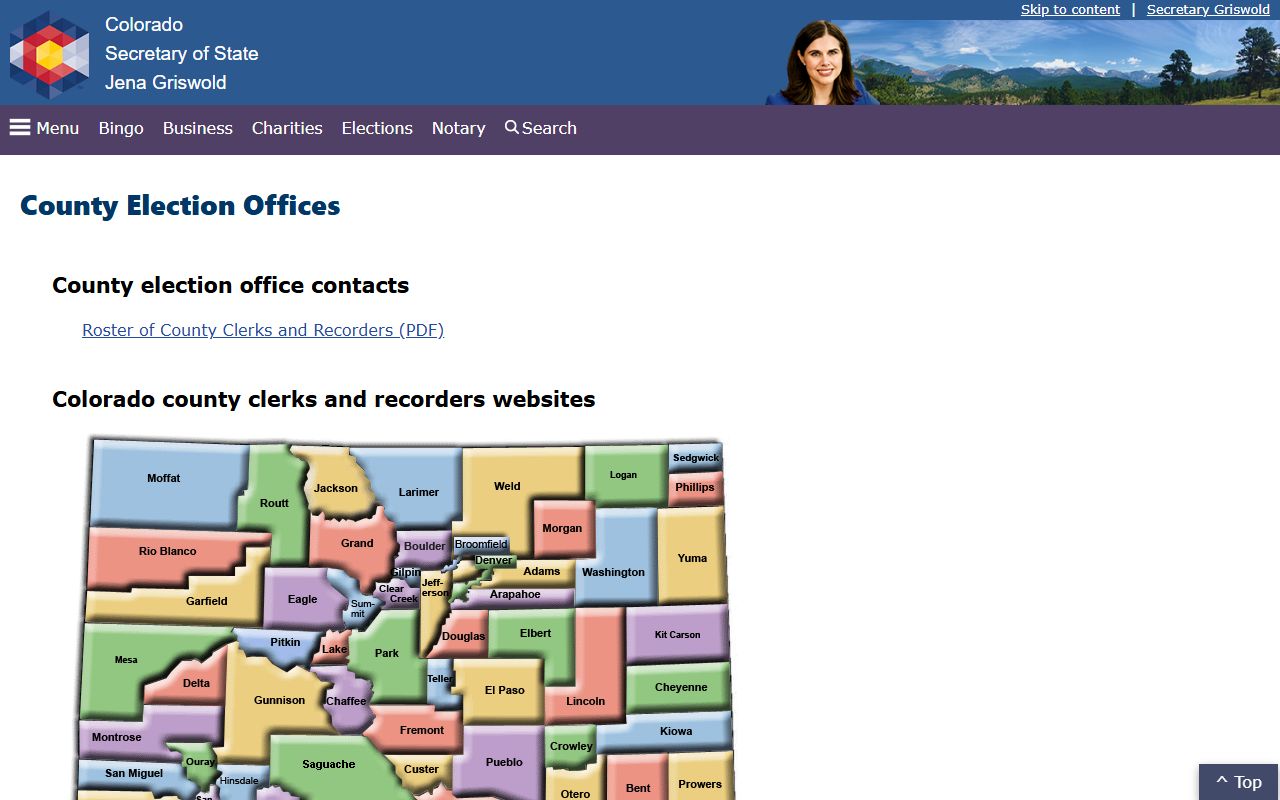
The Secretary of State website lists all county clerk offices. This directory helps you find contact information. You can locate phone numbers, addresses, and office hours. Each county sets its own fees and procedures. Call ahead to confirm what you need to bring.
Some Colorado counties offer online marriage license applications. This saves time before your visit. You still need to appear in person to show ID and pay fees. Both parties must bring valid identification. Acceptable forms include driver's licenses, passports, and military IDs. The county clerk will verify your information. Then they issue the license the same day.
Colorado Marriage Verifications from CDPHE
The Colorado Department of Public Health and Environment provides marriage verifications. These documents confirm a marriage took place. They are not certified copies of marriage certificates. Many people confuse these two documents. Knowing the difference saves time and money. Verifications cost $25 for the first copy. Additional copies cost $20 each.
To order a verification, you must complete an application. The marriage verification application is available online. You must provide proof of eligibility. The eligibility requirements document explains who can request records. Generally, you must be one of the spouses or have a direct interest.
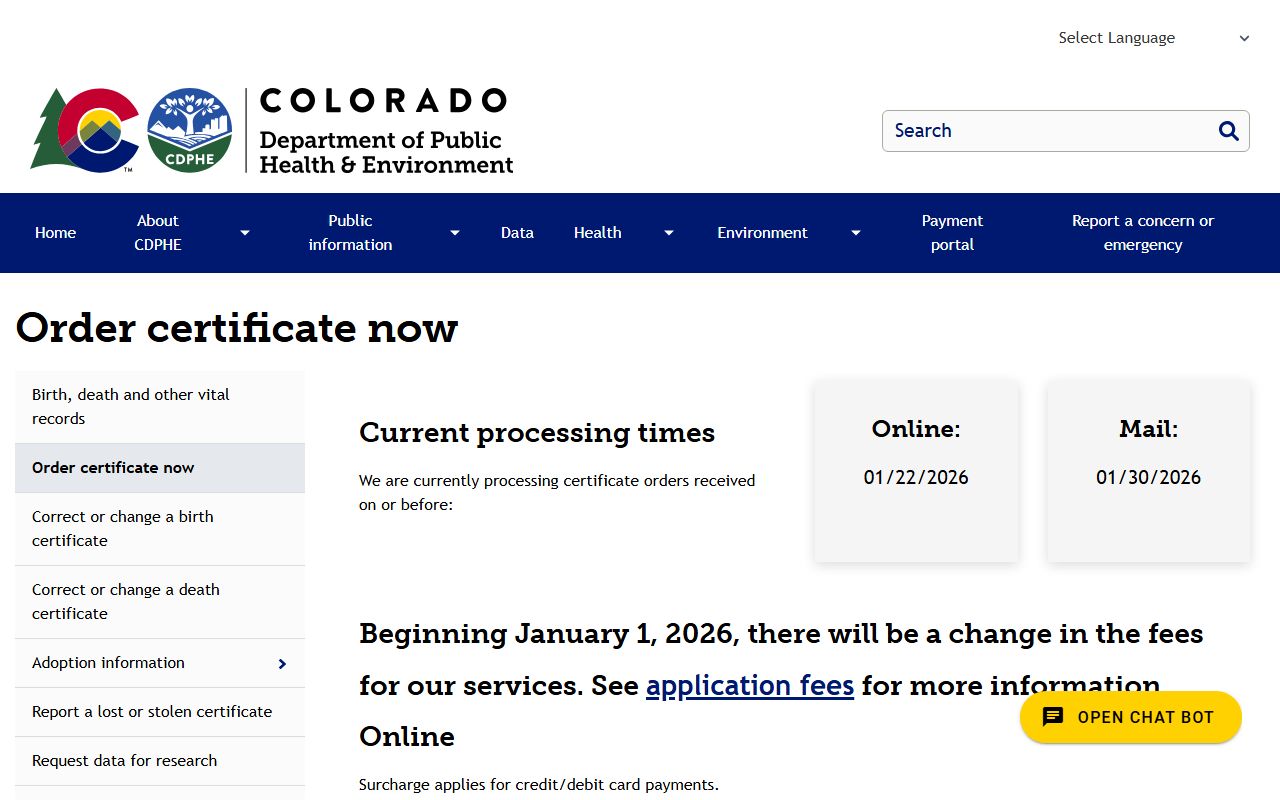
Mail your completed application to the Vital Records Section. The address is 4300 Cherry Creek Drive South, Denver, CO 80246-1530. Include a copy of your ID and payment. The office is open Monday through Friday from 8:30 a.m. to 4:30 p.m. However, in-person visits require appointments. No walk-in services are available.
VitalChek offers online ordering for faster service. Visit vitalchek.com to place an order. They charge a processing surcharge on top of state fees. Processing times vary. Online orders through VitalChek typically take less time than mail requests.
Online Ordering for Colorado Marriage Records
Colorado authorizes specific vendors for online marriage record orders. These services provide faster processing than mail requests. They also offer convenience for people who live out of state. Two main vendors serve Colorado residents.
VitalChek is the primary authorized vendor. They work directly with the Colorado Vital Records Section. You can order marriage verifications through their secure website. Call 866-632-2604 for customer service. They accept credit and debit cards. A surcharge applies to card payments. This fee covers their processing services.

GoCertificates handles birth and death records only. They do not process marriage record requests. Do not use this service for marriage documents. Stick with VitalChek or mail your request directly to CDPHE.
When ordering online, have your information ready. You need full names of both spouses. The date and county of marriage are required. You must also upload identification documents. Enlarge and lighten your ID copy for clarity. Orders will not process until legible ID is received.
Historical Marriage Records in Colorado
The Colorado State Archives preserves historical marriage documents. Their collection includes records from the late 1800s through 1960. Types of records vary by county. You may find marriage licenses, applications, certificates, or registers. The Archives holds a statewide marriage index for 1890 to 1939. This index is searchable online.
The index contains names of both spouses. It also lists the marriage date, county, and license number. Not all indexed records are held by the Archives. Some records remain at the county level. If the Archives does not have your record, contact the county clerk.
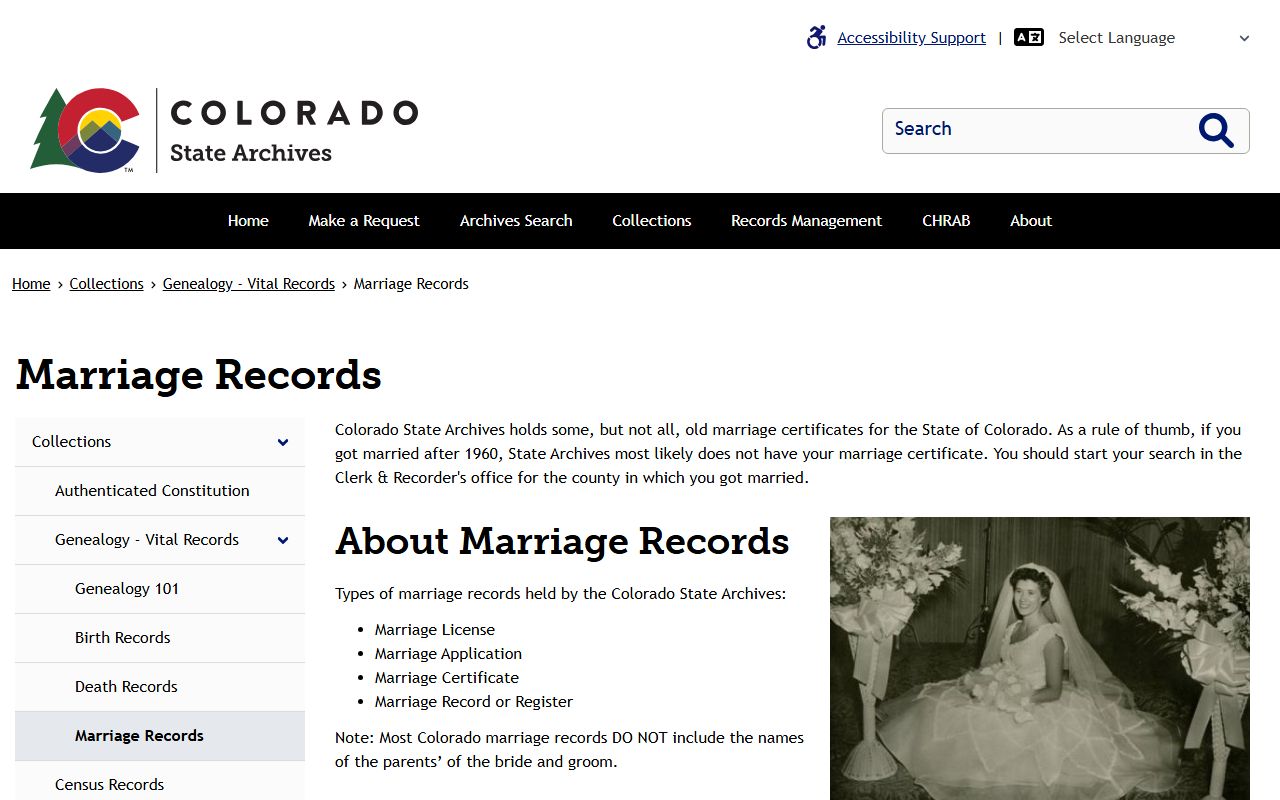
Most Colorado marriage records do not include parents' names. This differs from some other states. Genealogy researchers should note this limitation. Fees at the State Archives are lower than CDPHE. Vital record requests cost $11 plus a $12 handling fee per request.
The Archives research room is open Tuesday through Friday. Hours are 10 a.m. to 4 p.m. Mountain Time. The room is closed on Mondays as of September 15, 2025. Appointments are required for in-person visits. No walk-ins are accepted. Call 303-866-2358 to schedule a visit.
Colorado Marriage Record Privacy Laws
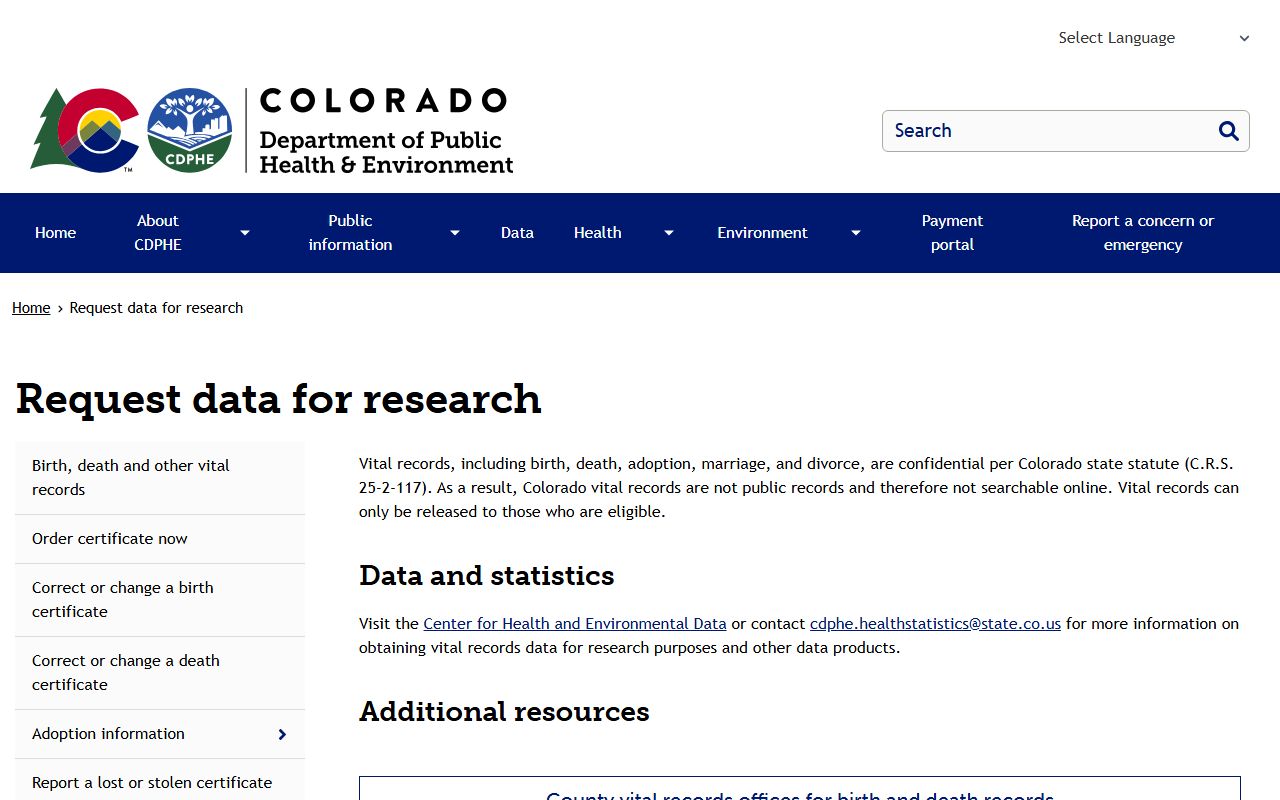
Colorado treats marriage records as confidential documents. Under C.R.S. § 25-2-117, vital records are not public records. This means they are not searchable online by the general public. Only people with a direct and tangible interest can obtain copies.
The law defines who has access. Spouses can request their own marriage records. Children, parents, and legal representatives may also qualify. You must submit proof of your relationship. Acceptable documents include birth certificates or court orders. Insurance policies showing the relationship also work.
All requests require proof of identification. The identification requirements list acceptable documents. Primary ID includes driver's licenses, passports, and military cards. Secondary options include work IDs and voter registration cards. Expired documents over six months old are not accepted.
Note: Confidentiality rules protect personal information but require extra steps to obtain records.
Common-Law Marriage in Colorado
Colorado recognizes common-law marriages. These marriages do not require licenses or ceremonies. However, official verification is not available from CDPHE. This surprises many people. The state cannot provide documents proving a common-law marriage exists.
Under C.R.S. § 14-2-104, common-law marriages are valid in Colorado. Couples must agree to be married. They must live together. They must present themselves as married to others. No specific time period is required. The key factor is the couple's intent and conduct.
To create a record, couples can file an affidavit. The sample affidavit is available from CDPHE. Sign it before a notary public. Then file it with a Colorado county clerk and recorder. This creates a paper trail for future needs.
Ending a common-law marriage requires divorce proceedings. You cannot simply separate. The courts must dissolve the marriage legally. This protects property rights and other legal interests. Contact a family law attorney for guidance.
Browse Colorado Marriage Records by County
Each county in Colorado maintains marriage records through the clerk and recorder's office. Select a county below to find local contact information and resources for marriage records in that area.
Marriage Records in Major Colorado Cities
Residents of major Colorado cities obtain marriage licenses through their county clerk and recorder's office. Select a city below to learn about marriage records in that area.